The Problem With “Good Enough” WiFi
Most homeowners today have some form of “mesh WiFi.”
They go to a store, buy a system like:
• Eero
• Google Nest WiFi
• Orbi
Set it up…
And at first, it seems fine.
Until:
• Certain rooms are still slow
• Video calls drop
• Cameras lag or disconnect
• Speeds fluctuate constantly
At that point, the assumption is:
👉 “I need faster internet”
But in most cases, that’s not the real problem.
What Consumer Mesh WiFi Actually Is
Mesh systems are designed for:
• Easy setup
• Plug-and-play convenience
• Average-sized homes
They work by:
• Wirelessly connecting multiple nodes
• Extending coverage by repeating signal
The Problem With Mesh WiFi
When WiFi nodes communicate wirelessly with each other:
• Speed is reduced at each hop
• Signal strength degrades
• Latency increases
• Performance becomes inconsistent
The more your system relies on mesh…
The more performance you lose.
Why Store-Bought Systems Struggle in Real Homes
Modern homes aren’t simple anymore.
You now have:
• Smart TVs
• Security cameras
• Phones, tablets, laptops
• Smart home devices
• Multiple users streaming at once
Most mesh systems were never designed for:
High-density, always-connected environments
Common Issues We See
• Dead zones in certain areas
• Devices randomly disconnecting
• Slow speeds despite fast internet plans
• Cameras buffering or failing to load
• Performance changing throughout the day
How Professional WiFi Systems Are Different
At SurfNet, we use Ubiquiti UniFi systems, which are built completely differently from consumer mesh systems.
Instead of relying on wireless connections between nodes:
We build networks with a wired backbone
Without a properly designed network installation, even the fastest internet providers will struggle to deliver consistent performance throughout a home or business.
The Key Difference: Access Points vs Mesh Nodes
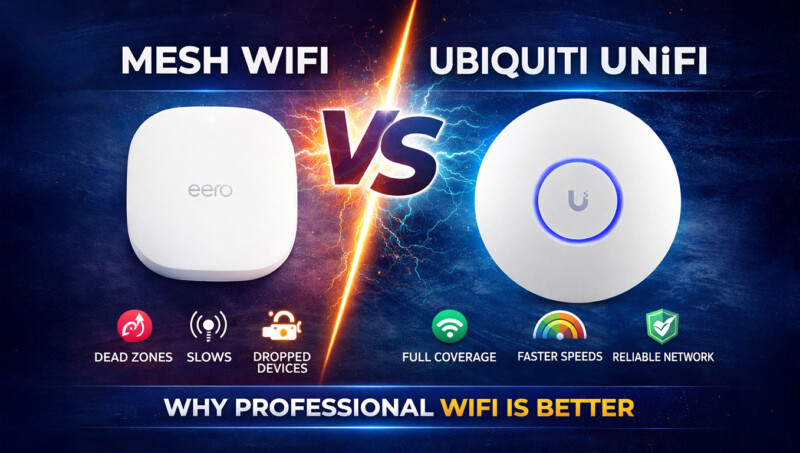
Consumer mesh systems:
Repeat signal wirelessly
Professional UniFi systems:
Distribute WiFi through multiple wired access points
What That Means for Performance
• Full-speed WiFi in every room
• No signal degradation between devices
• Lower latency
• Stable performance even under heavy use
Why UniFi Systems Perform Better
Ubiquiti UniFi systems are designed for:
• Businesses
• Large homes
• High-performance environments
They provide:
• Centralized network management
• Better handling of multiple devices
• More consistent coverage
• Scalability as your needs grow
Why Mesh WiFi Feels “Fine” at First
When a system is new:
• Fewer devices are connected
• Network demand is low
Over time:
• More devices are added
• Performance drops
• Problems become more noticeable
This is why many people think:
“My internet got worse”
When in reality:
Their network just couldn’t keep up
When Mesh WiFi Might Be Enough
Mesh systems can work in:
• Small homes or apartments
• Low device usage environments
• Basic internet needs
But for most modern homes in Jupiter and Palm Beach County:
It’s not enough.
The Real Solution: Proper Network Design
A high-performance network includes:
• Strategically placed access points
• Enterprise-grade equipment
• Proper configuration
This ensures:
• Full coverage
• Consistent speed
• Reliable performance
Why This Matters More Than Your Internet Plan
We regularly see homes with:
• 1 Gig internet
• Expensive mesh systems
And still:
• Slow performance
• Dead zones
• Constant frustration
Because the issue isn’t the provider…
It’s the network design.
Final Takeaway
Mesh WiFi is convenient.
But convenience and performance are not the same thing.
If you want:
• Reliable coverage
• Consistent speeds
• A network that actually performs
You need more than a store-bought system.
Need a WiFi System That Actually Works?
At SurfNet, we design and install professional-grade WiFi systems using Ubiquiti UniFi equipment—built for performance, reliability, and long-term scalability.
If you’re in Jupiter, Palm Beach Gardens, Tequesta, or surrounding areas, we can eliminate dead zones and deliver the performance your home or business actually needs.
👉 Call 561-510-6599 to speak directly with SurfNet or schedule a consultation today.